

Which Multivitamins Can Help With Tiredness and Low Energy?
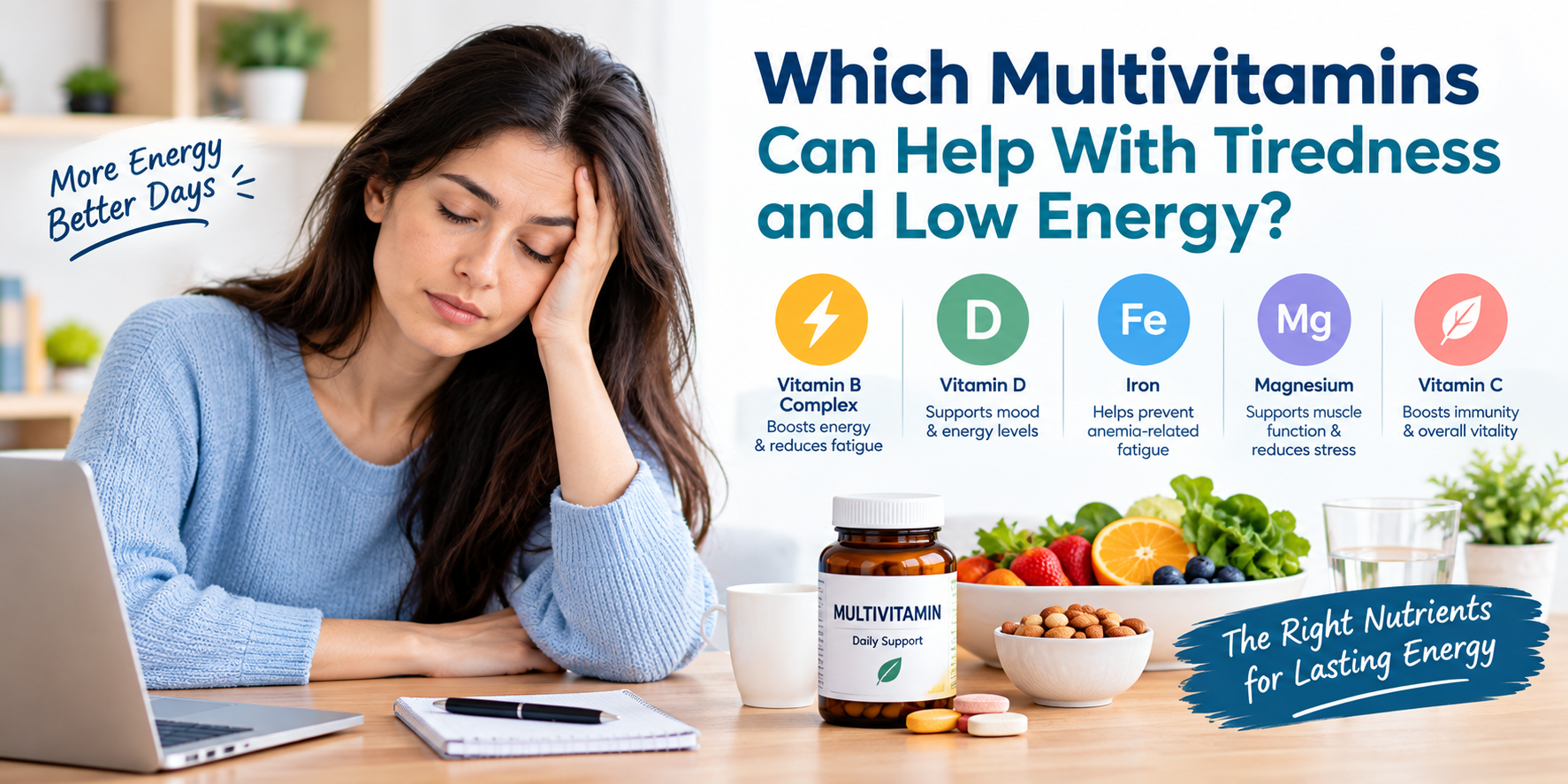
Tiredness and low energy can have several causes, including poor sleep, lifestyle factors, and vitamin or mineral deficiencies. B vitamins, iron, and vitamin D each play a distinct role in energy metabolism and red blood cell production. Understanding these roles can help identify when multivitamins may support nutritional needs and when persistent fatigue requires medical assessment.
Feeling tired after a poor night's sleep is normal, but ongoing low energy can be harder to explain. Diet, stress, sleep, illness, and nutrient deficiencies can all play a role. Some vitamins and minerals are particularly important for energy metabolism and healthy red blood cell production, so a deficiency may contribute to tiredness.
Multivitamins for energy can help fill nutritional gaps, but they are not a universal answer to fatigue. The most useful choice depends on the nutrients provided and the reason behind the low energy.
Which Nutrients Matter for Energy?
Several nutrients have important roles in normal energy production and the body's day-to-day functions. B vitamins, iron, vitamin D and other minerals may appear in multivitamin formulas, although the amounts can vary considerably.
The table below highlights nutrients commonly associated with energy and fatigue.
Nutrient | Role linked with energy | When deficiency may matter |
Vitamin B12 | Helps release energy from food and supports red blood cells | Can cause tiredness and lack of energy |
Folate | Helps form healthy red blood cells | Deficiency can contribute to anaemia and tiredness |
Iron | Helps make haemoglobin for oxygen transport | Deficiency can cause tiredness and low energy |
Vitamin B6 | Helps the body use and store energy from food | Deficiency can affect normal body functions |
Vitamin D | Supports healthy bones and muscles | Deficiency can affect muscle health |
B Vitamins and Low Energy
Multivitamin nutrients often include several B vitamins because each one helps the body process energy from food. Vitamin B1 helps release energy from food, while vitamin B6 supports the body in using and storing energy from protein and carbohydrates. Vitamin B12 also helps release energy from food and supports healthy red blood cells.
Vitamin B12
A deficiency of vitamin B12 can lead to severe fatigue, reduced energy levels, and weakness. It can also lead to anaemia and neurological symptoms, which is why persistent symptoms should not simply be treated with a supplement without investigating the cause.
Folate
Folate, also known as vitamin B9, is needed to form healthy red blood cells. A deficiency can lead to folate deficiency anaemia, which may cause tiredness and weakness.
Vitamin B6
Vitamin B6 helps the body use and store energy from protein and carbohydrates. It also contributes to haemoglobin formation, making it another nutrient commonly included in multivitamin formulas.
What About Iron?
Iron deserves particular attention when tiredness is accompanied by symptoms such as breathlessness, palpitations or pale skin. Iron deficiency anaemia can cause tiredness and lack of energy because the body has less haemoglobin available to carry oxygen.
Iron is sometimes included in multivitamins, but taking additional iron is not automatically appropriate for everyone. If iron deficiency is suspected, a healthcare professional can recommend suitable testing and treatment.
This is an important distinction when choosing supplements for low energy. A supplement should address an actual nutritional need rather than simply promise an energy boost.
Can Vitamin D Help With Tiredness?
Vitamin D is important for healthy bones, teeth and muscles. It is recommended for adults to take a daily vitamin D supplement during autumn and winter because sunlight exposure is limited during these months. Some people are advised to take vitamin D throughout the year because they have a higher risk of deficiency.
Vitamin D is not an instant energy supplement, however. Its main role is supporting normal body functions, so supplementation is most relevant when dietary intake or vitamin D levels are inadequate.
Choosing a Multivitamin for Tiredness
Looking for multivitamins for fatigue can produce a long list of products with very different formulations. The label is therefore worth checking rather than choosing based solely on the number of nutrients listed.
Check the Nutrient Profile
Look for a balanced combination of relevant vitamins and minerals rather than very high amounts of individual nutrients. The nutrients used can vary between products, so two formulas labelled as multivitamins may provide quite different amounts.
Consider Personal Needs
Age, diet and lifestyle can affect nutritional requirements. Someone following a vegan diet, for example, may need to pay particular attention to vitamin B12 because it is not naturally found in foods such as fruit, vegetables and grains.
Looking for multivitamins for adults? You can check Fylde Clinic to browse suitable options, check nutrient profiles, and choose a formula that fits your nutritional needs.
Avoid Megadoses
More is not always better. Certain vitamins and minerals can cause harm when taken in excessive amounts. For example, taking large amounts of vitamin B6 for an extended time can lead to peripheral neuropathy, whereas too much folic acid can conceal a deficiency in vitamin B12.
Are Multivitamins the Best Option for Low Energy?
The best multivitamins for energy are not necessarily the products with the highest nutrient quantities. A suitable formula should provide nutrients that complement the diet without unnecessary high doses.
It is also worth remembering that fatigue has many possible causes. Lack of sleep, stress, an unhealthy diet and limited physical activity can contribute to tiredness, while conditions such as iron deficiency anaemia, diabetes and thyroid problems can also cause ongoing fatigue.
For this reason, multivitamins should not be used to mask persistent or unexplained symptoms.
When Should Tiredness Be Checked?
Occasional tiredness may improve with better sleep, regular meals, physical activity and a balanced diet. NHS guidance recommends seeing a GP if tiredness has continued for several weeks, affects daily life or occurs alongside other symptoms.
Blood tests may be used to investigate possible causes, including anaemia, diabetes and thyroid problems. Vitamin B12 and folate deficiencies can also be assessed through symptoms and blood tests.
This matters because treating the underlying cause is more useful than simply taking vitamins for low energy without knowing why fatigue is happening.
Food Still Matters
Dietary supplements can enhance a well-rounded diet, but they should not substitute for healthy foods. Regular meals containing vegetables, fruit, wholegrains, protein sources and other nutrient-rich foods can help provide the vitamins and minerals needed for normal health.
NHS advice also recommends regular meals and healthy snacks as part of managing tiredness, alongside adequate sleep and physical activity.
A multivitamin may be useful when dietary intake does not provide enough of a particular nutrient, but it should form part of a broader approach to nutrition.
Final Thoughts
The best multivitamins for tiredness are not defined by a single ingredient or the highest dose. Vitamin B12, folate, B6, iron and vitamin D all have important roles in normal body functions, but supplementation is most useful when it addresses a genuine nutritional need.
For those looking to shop online for vitamins in the UK, Fylde Clinic offers a convenient way to order the best products and get them delivered straight to your doorstep!