

Eczema Flare-Ups in Winter: What Helps When the Heating Goes On?
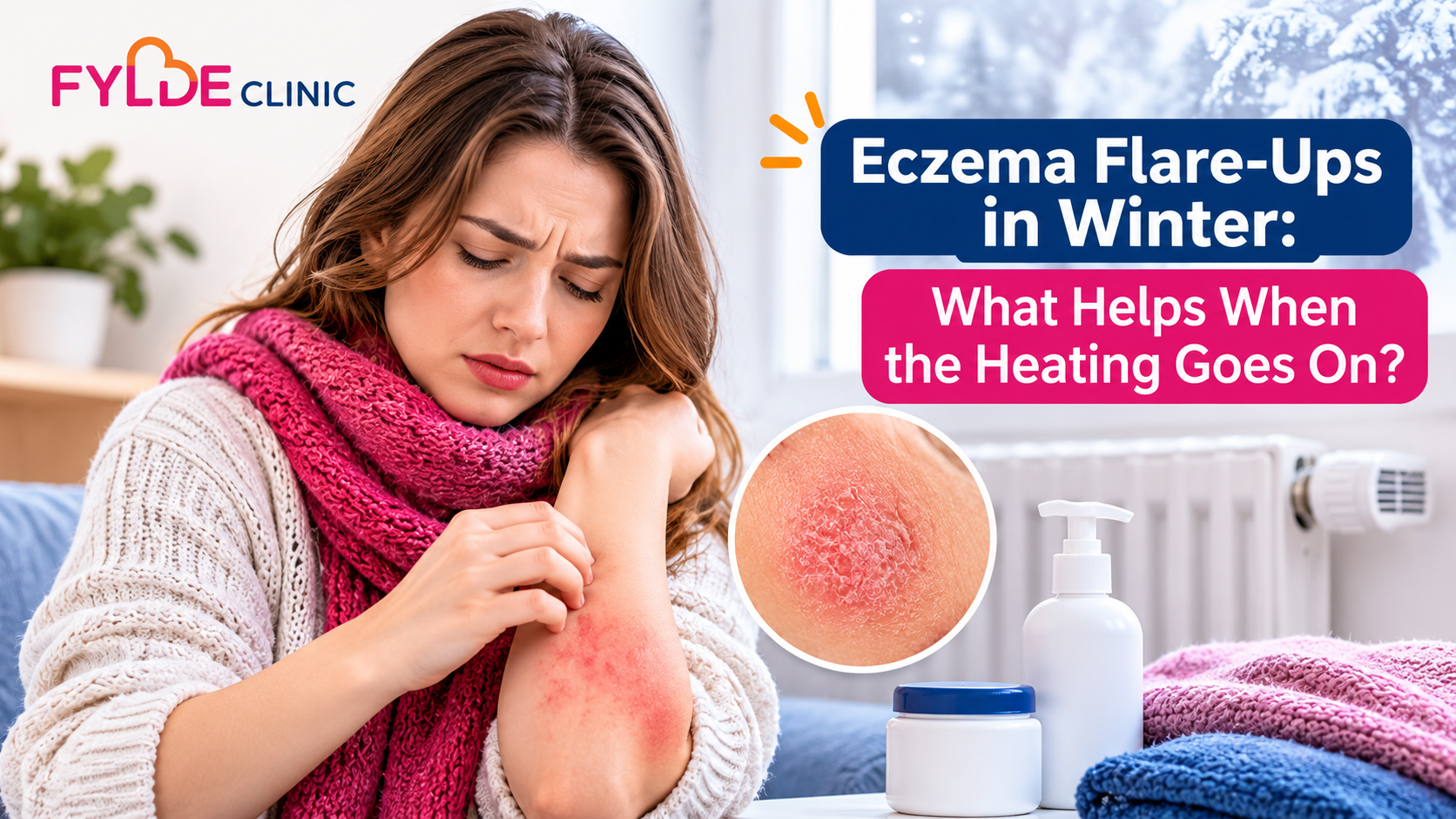
Cold outdoor air and indoor heating can dry the skin and make eczema worse. Knowing your triggers, choosing the right moisturiser, and following gentle skincare habits all help relieve itching, protect your skin barrier, and keep winter flare-ups under control.
Cold weather can be tough on anyone living with eczema. As temperatures drop and the heating goes on, your skin loses moisture faster, leaving it dry, tight, and irritated. For some people, just a few hours in a centrally heated room is enough to set off itching and redness.
Winter eczema flare-ups usually come down to a mix of cold outdoor air, low indoor humidity, hot showers, and changes to your skincare habits. Together, these weaken the skin barrier, so your skin struggles to hold on to moisture and protect itself from irritants.
Understanding what triggers winter eczema and making a few practical changes at home can ease discomfort and keep your skin calmer throughout the colder months.
Why Does Eczema Get Worse in Winter?
Eczema weakens the skin barrier, making it harder for your skin to hold moisture and keep irritants out. In winter, several changes in your environment make this problem more noticeable.
Cold Outdoor Air Reduces Skin Moisture
Cold air holds less moisture than warm air, so your skin can quickly become dry, rough, and more prone to irritation. Wind also strips away surface moisture, leaving eczema-prone areas feeling tight and uncomfortable.
Indoor Heating Dries Out the Air
Central heating warms your home but lowers the relative humidity. Spending long periods in heated rooms draws moisture out of your skin, which increases dryness and itching.
Hot Showers Can Irritate Sensitive Skin
A hot shower may feel comforting after time in the cold, but hot water strips natural oils from your skin. This weakens its protective barrier and can make existing eczema worse.
Winter Clothing Can Cause Friction
Thick jumpers, woollen scarves and synthetic fabrics can rub against sensitive skin, and some materials trap heat and sweat, adding to the irritation. Soft cotton layers are usually kinder to eczema-prone skin.
Does Central Heating Make Eczema Worse?
Central heating can worsen eczema by warming indoor air and lowering its relative humidity. In drier air, moisture evaporates from your skin more easily, which can increase dryness, flaking and itching.
You do not need to switch the heating off this winter. Keep rooms at a comfortable temperature without overheating them, moisturise regularly and avoid sitting right next to hot radiators.
A humidifier can add moisture to particularly dry rooms, but clean it regularly to stop mould and bacteria building up. Small adjustments to your indoor conditions are usually more practical than drastic changes to your heating routine.
What Are the Best Ways to Stop Eczema Itching?
Itching is one of the most frustrating parts of eczema, especially when it worsens at night or after time in a heated room. Knowing how to stop eczema itching helps you manage the discomfort and resist the urge to scratch. Scratching may bring brief relief, but it damages the skin and increases inflammation.
These habits can help you manage itching through the winter.
Apply Moisturiser Regularly
Moisturising is the cornerstone of eczema care. Apply a generous amount of emollient throughout the day, especially after washing or bathing. Well-moisturised skin loses less water and keeps its protective barrier stronger.
Use Lukewarm Water
Avoid very hot baths and showers, as they strip natural oils from your skin. Lukewarm water is gentler on sensitive skin. Keep bathing time short and apply moisturiser straight afterwards while your skin is still slightly damp.
Avoid Scratching the Affected Areas
Scratching creates small breaks in the skin, which raises the risk of infection and further irritation. Keep your fingernails short, and try a cool compress or gently pressing itchy areas instead.
Wear Soft, Breathable Fabrics
Choose loose-fitting cotton clothing to reduce friction against irritated skin, and avoid rough wool or fabrics that make you sweat. Washing new clothes before you wear them also removes manufacturing residues that can irritate sensitive skin.
Keep the Bedroom Comfortable
Night-time itching disrupts sleep and makes eczema harder to manage. Avoid overheating your bedroom, choose breathable bedding and apply moisturiser before bed. A cool, comfortable bedroom helps reduce irritation.
Which Moisturiser Works Best for Eczema in the UK?
Choosing the best moisturiser for eczema depends on your skin type, how severe your symptoms are, and what feels comfortable. The right emollient reduces moisture loss, softens dry patches, and protects your skin from everyday irritants.
Creams for Everyday Moisturising
Emollient creams work well for everyday eczema care, particularly when your skin feels dry but is not badly cracked. They add moisture without the heaviness of an ointment, making them a practical choice for daytime use.
Ointments for Very Dry Skin
Ointments have a thicker, greasier texture that forms a protective layer over the skin. They work best on very dry, flaky or cracked areas, and their richness makes them ideal for overnight use.
Lotions for Mild Dryness
Lotions are lighter and spread easily over large areas. However, they contain more water than creams and ointments, so they may not protect severely dry patches well enough. Some people also find that certain lotions sting irritated skin.
Fragrance-Free Products for Sensitive Skin
Fragrances can irritate eczema-prone skin, so fragrance-free moisturisers are a sensible choice. Look for products made for sensitive or eczema-prone skin, and test a new product on a small area before applying it more widely.
Moisturiser type | Best suited for | Key benefit |
Ointments | Very dry or thickened skin | Provide intensive moisture and help reduce water loss |
Creams | Dry, sensitive skin | Offer moisture without feeling as heavy as ointments |
Lotions | Mild dryness | Spread easily and absorb quickly |
Fragrance-free emollients | Sensitive, eczema-prone skin | Reduce exposure to potential fragrance irritants |
Looking for the right emollient? Browse the range of Eczema Products online at Fylde Clinic and find moisturisers that fit your everyday eczema care routine.
How to Manage Eczema at Home During Winter
A consistent skincare routine reduces dryness and makes winter eczema easier to manage. Small changes to your daily habits also limit your exposure to common triggers.
Apply an emollient straight after bathing or washing your hands to help retain moisture.
Choose gentle, fragrance-free washing products instead of strongly scented soaps and shower gels.
Avoid setting the heating too high, as excessive indoor warmth can increase discomfort and sweating.
If indoor air feels particularly dry, a clean humidifier may help maintain more comfortable humidity levels.
Use fragrance-free detergents to reduce contact with potential irritants, and skip fabric softeners if they make your skin worse.
When Should You Seek Medical Advice for Winter Eczema?
Home care can manage mild dryness and itching, but some flare-ups need medical attention. If redness persists, irritation worsens, or your eczema does not improve with regular moisturising, speak to a healthcare professional.
Get medical advice if the affected skin becomes painful, swollen or hot, or develops cracks and blisters. Yellow crusting, pus or symptoms that worsen quickly may signal a skin infection that needs prompt assessment.
A healthcare professional may recommend treatments such as topical corticosteroids to calm inflammation during a flare-up. Always follow the instructions you are given, as the right strength and length of treatment depend on the area affected and how severe the eczema is.
Conclusion
Winter makes eczema harder to manage because cold air, indoor heating and hot showers all draw moisture from your skin. Regular moisturising, gentle bathing habits and comfortable indoor temperatures help reduce dryness and itching, while the right emollient and early action on signs of infection keep flare-ups under control.
Do not let winter dryness take over your skin. Find eczema care products and professional advice at Fylde Clinic, a GPhC-registered online pharmacy in the UK, and give your skin the care it needs all season.
Frequently Asked Questions
Why does eczema get worse in winter?
Cold air, low humidity and indoor heating can dry out the skin, making eczema symptoms worse.
How often should you moisturise eczema-prone skin?
Moisturise at least twice daily and apply more often when your skin feels dry.
Can central heating trigger eczema itching?
Yes. Central heating can reduce indoor humidity and dry out the skin, which may increase itching and irritation.