

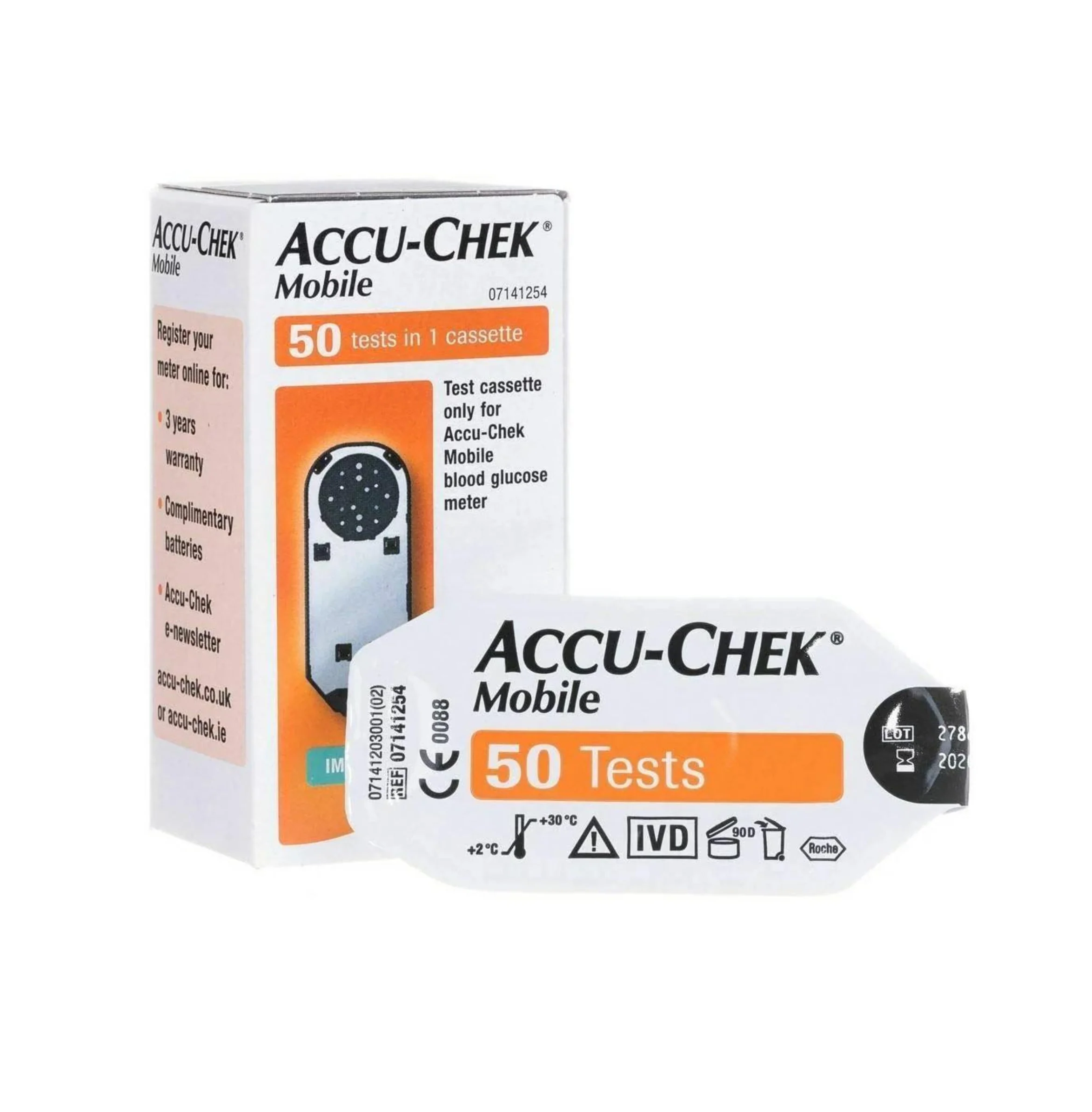
Accu-Chek - Mobile Diabetes Test Strip Cassette – 50 Tests
£11.17 ex. VAT · includes £2.23 (20.00% VAT)
Product Overview
Accu-Chek Mobile Test Cassette with 50 integrated blood glucose tests on a continuous tape for easy, hygienic self-monitoring with the Accu-Chek Mobile system.
Description
Accu-Chek Mobile Blood Glucose Test Cassette – 50 Tests is a blood glucose monitoring consumable designed for people living with diabetes who wish to self-monitor blood sugar levels quickly and easily. It is part of the Accu-Chek Mobile system and is compatible exclusively with the Accu-Chek Mobile meter. Unlike conventional test strips supplied in pots, this product features a single continuous tape cassette containing 50 tests, eliminating the need to handle and dispose of individual strips.
The cassette’s guidance tabs aid correct placement of the blood drop and help minimise accidental contact with the test area, enhancing ease of use and reducing contamination risk. Designed for everyday self-monitoring by adults, the system provides results in approximately 5 seconds from a very small blood sample (~0.3 µL).
Brand: Accu-Chek (a diabetes care brand by Roche).
Pack Size: One cassette containing 50 tests.
Intended Use: For self-monitoring of blood glucose concentrations in people with diabetes.
How to Use
- Prepare Meter & Hands: Ensure the Accu-Chek Mobile meter has batteries fitted and switch it on per the device instructions. Wash and dry hands thoroughly before testing to reduce contamination risk.
- Insert Cassette: Load the Accu-Chek Mobile Test Cassette into the meter as directed in the Accu-Chek Mobile user manual.
- Obtain Blood Sample: Using a sterile lancing device (e.g., Accu-Chek FastClix), obtain a fresh capillary blood drop.
- Apply Blood: Touch the blood drop to the guidance tab area; the cassette’s continuous tape will capture it and the meter will start the analysis.
- Read Result: Your blood glucose level will typically display on the metre within ~5 seconds.
- Record & Act: Note the reading and follow your diabetes care plan actions as advised by your healthcare professional.
- Dispose: At the end of the cassette’s life (after 50 tests or within 90 days of opening), dispose of the cassette and any medical waste in accordance with local clinical waste guidance.
Important: Always follow the Accu-Chek Mobile meter instructions supplied with your device and refer to your clinician or diabetes specialist nurse for personalised interpretation and support.
Ingredients
As a blood glucose test cassette, this product is a medical device consumable and does not contain traditional pharmaceutical ingredients. It comprises engineered components that enable electrochemical detection of glucose from a blood sample. Typical structural elements include:
• Continuous test tape with integrated electrodes and reagent chemistry — reacts with glucose in the blood to generate a measurable signal.
• Guidance tabs and cassette body — plastic components that manage the continuous tape and facilitate correct sample application.
There are no “active pharmacological ingredients” in the cassette itself. The reagents embedded on the tape are designed for in vitro diagnostic use and are not ingested or metabolised.
Side Effects & Warnings
Safety Warnings & Precautions
• For in vitro diagnostic use only: This device is intended for blood glucose self-monitoring outside the body and should only be used with an Accu-Chek Mobile meter.
• Single patient use: Do not share the device or cassette with others to reduce the risk of cross-infection.
• Do not reuse: The cassette should only be used until all 50 tests are completed or within the 90-day use-after-opening period if stored correctly; after that it may give inaccurate results.
• Check packaging: Do not use if the cassette or its packaging is damaged, wet, or open, as this may affect test performance.
• Storage conditions: Store unopened cassettes between +2 °C and +30 °C in a dry place away from direct sunlight. Avoid transporting cassettes outside of the sealed container to prevent moisture ingress.
• Blood handling: Handling blood carries risk; use sterile lancets and dispose of sharps safely in approved sharps containers.
• Meter guidance: Always follow the metre’s specific instructions and quality control checks to ensure accuracy.
When to Seek Clinical Guidance
If readings are consistently outside expected ranges or do not correlate with symptoms, repeat the test with a fresh cassette and consult your pharmacist or diabetes specialist nurse. Do not adjust your prescribed insulin or other diabetes treatments based solely on a single reading without professional advice.