

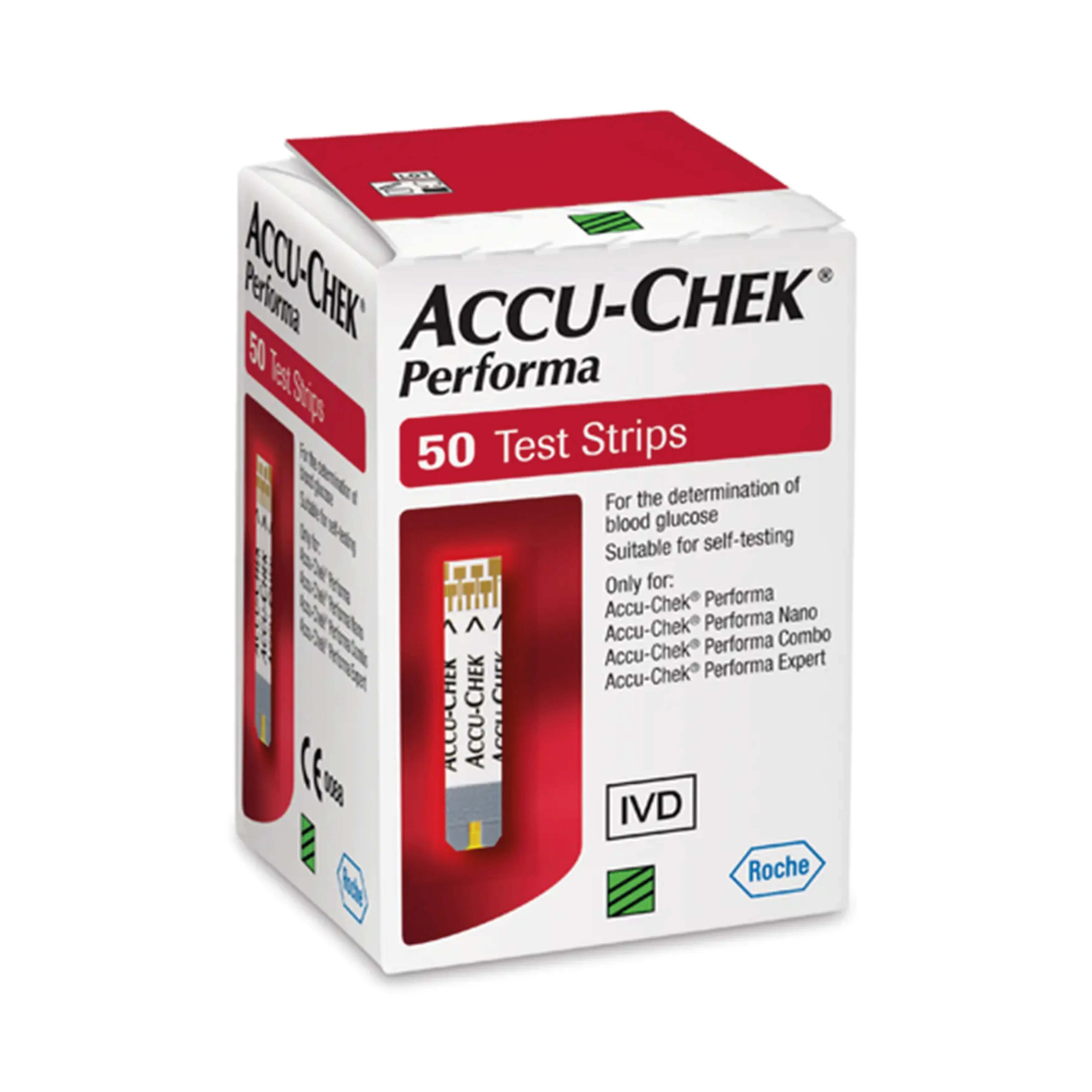
Accu-Chek Performa Test Strips - 50 Strips
£8.29 ex. VAT · includes £1.66 (20.00% VAT)
Product Overview
Pack of 50 Accu-Chek Performa blood glucose test strips for reliable self-monitoring of blood glucose. Fast results with a small sample. Compatible with Performa family meters.
Description
Accu-Chek Performa Test Strips – Pack of 50 Strips are blood glucose test strips designed for accurate, reliable self-monitoring of blood glucose (BG) levels in people with diabetes. These strips are made for use with the Accu-Chek Performa family of blood glucose metres (including Performa and Performa Nano) and help users manage their diabetes effectively with quick, consistent glucose measurements.
These test strips are engineered with a high-contrast dosing area and a larger application surface to make it easier to apply a small blood sample accurately and consistently. They require only a tiny volume of capillary whole blood, minimising discomfort and facilitating frequent monitoring.
Accu-Chek is one of the leading global brands in diabetes care, trusted by healthcare professionals and patients alike for quality, accuracy and ease of use in blood glucose monitoring.
How to Use
- Prepare hands and meter: Wash and dry hands thoroughly before testing to ensure accuracy.
- Insert a strip: Remove a single strip from its container and insert it into your Accu-Chek Performa metre — the device will switch on automatically.
- Apply blood: Using a lancing device, obtain a drop of capillary blood (approximately 0.6 µL). Touch the edge of the strip’s sample window to the blood drop.
- Read result: The meter will display your blood glucose result within seconds.
- Record and act: Document the result according to your diabetes care plan and take action as advised by your healthcare professional if levels are outside target.
- Dispose: Used test strips should be discarded as clinical waste and not reused.
Important: Always follow your metre’s user guide and the strip package instructions. Do not use Accu-Chek Performa strips with other metres.
Ingredients
Accu-Chek Performa Test Strips are medical diagnostic consumables rather than medicines, so they do not have typical “ingredients” like a drug. Instead, each strip comprises:
- Electrochemical sensors and electrodes – used to detect glucose levels from the blood sample.
- Reagent chemistry integrated on the strip — reacts with glucose in the sample to produce an electrical signal.
- Plastic strip body and handling surfaces – designed for easy insertion and secure contact with the blood drop.
The combination of these components allows the connected glucose metre to interpret the reaction and display a quantitative blood glucose result.
Side Effects & Warnings
Important Warnings
- For in vitro diagnostic use only: These strips are designed for testing outside the body with a compatible Accu-Chek Performa metre. They are not for diagnostic use on neonates, and are not intended to diagnose diabetes or replace professional lab measurements.
- Single-use only: Do not reuse test strips. Reuse can lead to inaccurate results and compromise clinical decisions.
- Storage conditions: Store strips in their original container with the lid tightly closed, at recommended temperatures (typically 2 °C – 30 °C), and use within the expiry date. Do not expose to moisture, heat or direct sunlight.
Precautions
- Risk of infection: Used strips may be contaminated with blood — handle and dispose of them in line with local clinical waste guidance.
- Use immediately after removal: Use a strip immediately once removed from the container to help protect accuracy.
- Damaged packaging: If the container is damaged, open prior to first use, or the cap doesn’t close properly, do not use the strips — this may affect performance.
- Interpret with care: If your metre displays error symbols or results that don’t match your symptoms, repeat the test with a new strip and consult your healthcare professional if uncertainty persists.
When to Seek Advice
Contact your pharmacist or diabetes care team if you are unsure how to interpret results, how often to monitor, or if you experience symptoms of hypoglycaemia or hyperglycaemia that do not align with your meter readings.