

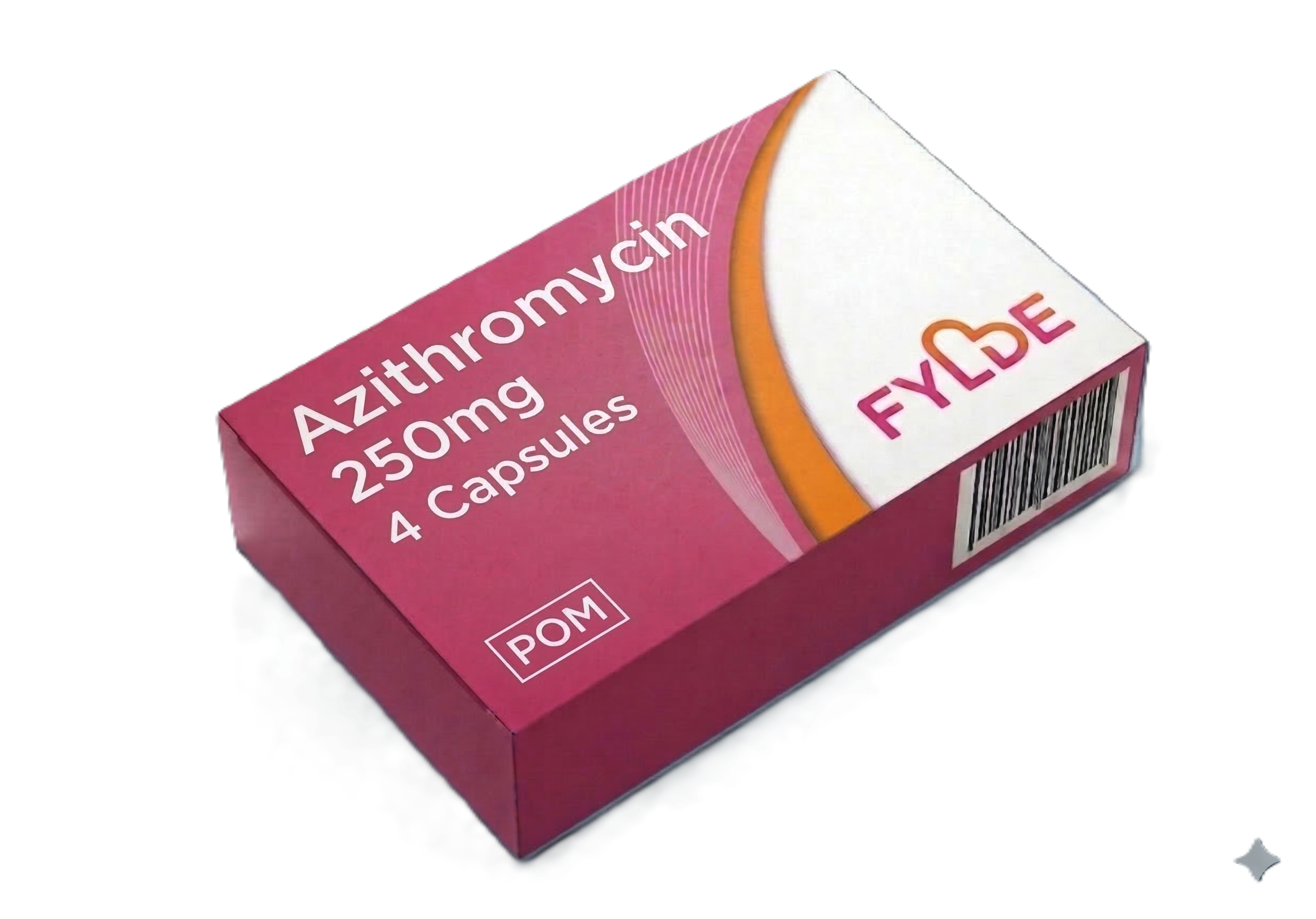
Azithromycin 250mg Capsules - 4 Capsules
This product requires a valid prescription
Complete a free online consultation with our clinicians to get your prescription issued.
Free Clinical review - Next Day Delivery Once Approved
Product Overview
This is a generic product, therefore depending on availability, the brand you receive may not be the same as the one pictured.
Description
Azithromycin 250mg Capsules are an oral macrolide antibiotic used to treat certain infections caused by bacteria and other susceptible micro-organisms. The official patient leaflet lists uses including chest, throat or nasal infections such as bronchitis, pneumonia, tonsillitis, sore throat and sinusitis, ear infections, skin and soft tissue infections such as abscesses or boils, and certain sexually transmitted infections caused by Chlamydia trachomatis and Neisseria gonorrhoeae.
Each capsule contains 250mg azithromycin. The leaflet describes the capsules as white hard gelatin capsules marked Pfizer and ZTM 250. It also confirms that Zithromax capsules come in blister packs of 4 or 6, so the 4-capsule pack is part of the licensed pack range for this product.
This medicine is intended for use only as prescribed. The leaflet advises that treatment should be completed for the full prescribed course, even if symptoms begin to improve, because stopping too early may allow the infection to return.
How to Use
Take Azithromycin 250mg Capsules exactly as your doctor, prescriber or pharmacist has told you. The leaflet says the capsules should be swallowed whole. Zithromax capsules should be taken at least 1 hour before food or 2 hours after food.
For adults and children over 45kg, the leaflet states the recommended dose is 500mg once daily for 3 days, which means 2 capsules taken together once a day for 3 days. For some infections such as Chlamydia, the recommended dose is 1g taken all together on one day only, which means 4 capsules as a single dose. For gonorrhoea, the leaflet states azithromycin is used in combination with ceftriaxone according to treatment guidance. Always follow the directions shown on the dispensing label.
If you miss a dose, take it as soon as you can, then take the next dose at the usual time. Do not take a double dose to make up for a forgotten dose. If you take too much, contact a doctor or nearest hospital straight away.
Ingredients
Active ingredient:
Each capsule contains 250mg azithromycin. The SmPC states this is provided as azithromycin dihydrate 262.05mg, equivalent to 250mg azithromycin base.
Other ingredients:
Lactose anhydrous, magnesium stearate, maize starch, sodium lauryl sulfate, gelatin, iron oxide black (E172), shellac, propylene glycol, sulfur dioxide, titanium dioxide.
Allergy / intolerance advice:
The leaflet states that the capsules contain lactose, which should be considered if you have been told you have an intolerance to some sugars. They also contain sulfur dioxide, which may rarely cause severe allergic reactions or wheezing. The leaflet further states the capsules are essentially sodium free.
Side Effects & Warnings
Like all medicines, Azithromycin 250mg Capsules can cause side effects, although not everybody gets them. The leaflet advises getting urgent medical help if you develop sudden wheeziness, difficulty breathing, swelling of the eyelids, face or lips, widespread rash or itching, severe or prolonged diarrhoea with blood or mucus, rapid or irregular heartbeat, low blood pressure, or serious skin reactions including Stevens-Johnson syndrome, toxic epidermal necrolysis, DRESS or AGEP.
The leaflet lists very common side effects as diarrhoea, stomach pain, feeling sick or being sick, and flatulence. Common side effects include headache, dizziness, taste disturbance, visual impairment, deafness, indigestion, rash, itchy skin, joint pain and fatigue. It also lists less common and rare effects including yeast infections, pneumonia, constipation, dry mouth, liver inflammation, skin sensitivity to sunlight, abnormal liver function, jaundice, irregular heartbeat, pancreatitis and kidney inflammation or failure.
Do not take azithromycin if you are allergic to azithromycin, any other macrolide antibiotic such as erythromycin or clarithromycin, or any of the ingredients in the capsules. Speak to a doctor or pharmacist before taking it if you have kidney problems, heart conditions, liver problems, myasthenia gravis, or low levels of potassium or magnesium in the blood. The leaflet also warns that azithromycin should not be taken together with ergot derivatives such as ergotamine.
The leaflet advises telling your doctor or pharmacist if you take medicines such as warfarin, ciclosporin, antacids, digoxin, colchicine, quinidine, procainamide, dofetilide, amiodarone, sotalol, cisapride, terfenadine, or other medicines that may affect heart rhythm. If you are pregnant or breast-feeding, you should ask your doctor or pharmacist for advice before taking this medicine.