

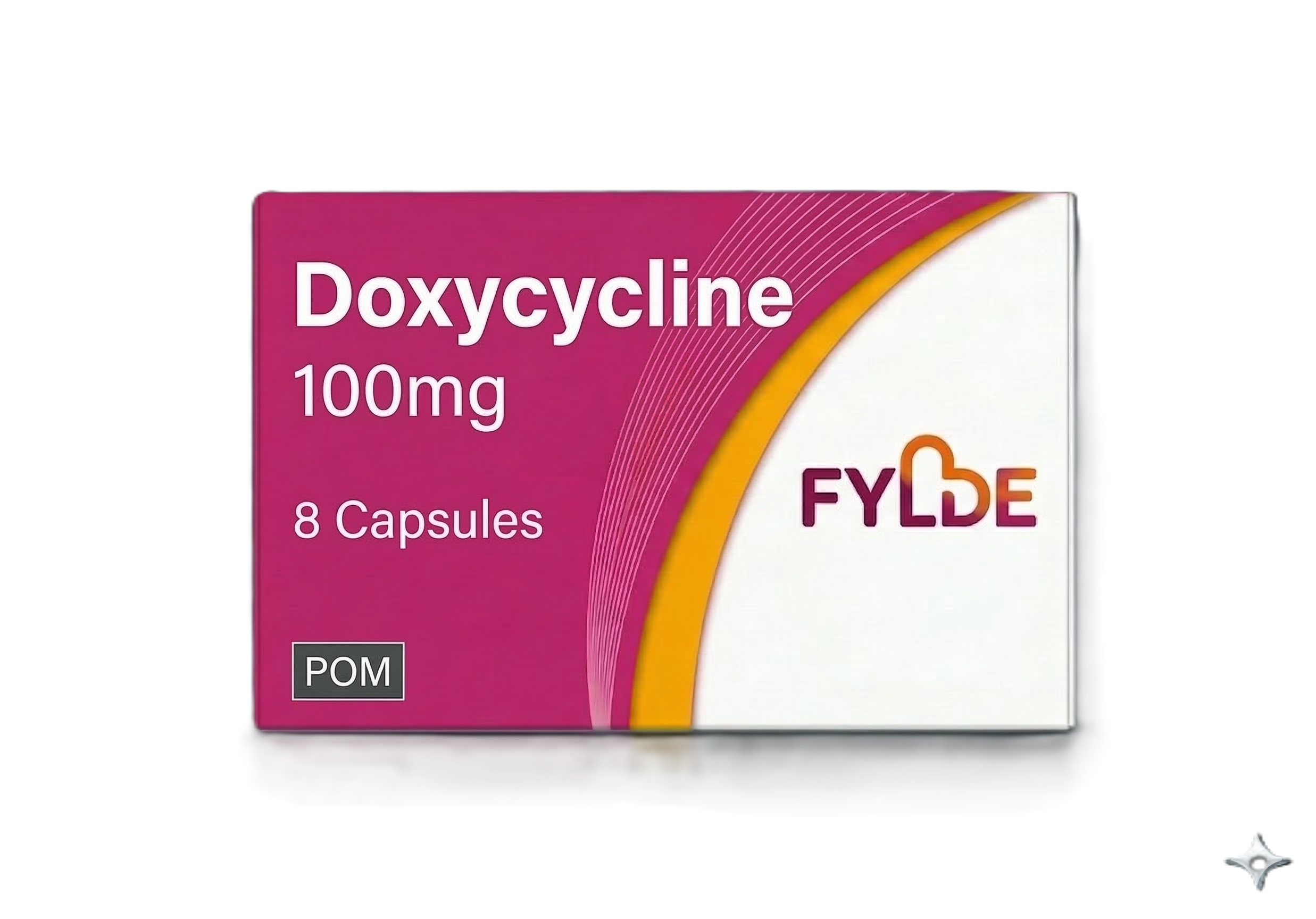
Doxycycline 100mg Capsules - 8 Capsules
This product requires a valid prescription
Complete a free online consultation with our clinicians to get your prescription issued.
Free Clinical review - Next Day Delivery Once Approved
Product Overview
This is a generic product, therefore depending on availability, the brand you receive may not be the same as the one pictured.
Description
Doxycycline 100mg Capsules are an oral tetracycline antibiotic containing doxycycline, supplied here as an 8 capsule pack. The patient leaflet states that doxycycline is used to treat a wide range of infections, including chest, lung or nasal infections, urinary tract infections, soft tissue and skin infections including acne, eye infections, certain sexually transmitted infections such as chlamydia, gonorrhoea and syphilis, and some infections linked to tick-borne or contaminated-water exposure. The leaflet also notes that doxycycline may be used to help prevent certain infections in specific circumstances, including malaria, travellers’ diarrhoea, scrub typhus and leptospirosis, when prescribed for those purposes.
Each 100mg capsule contains doxycycline equivalent to 100mg, presented as doxycycline hyclate, and the leaflet describes the 100mg capsules as unmarked, hard, green coloured capsules. The same leaflet confirms that 100mg capsules are available in blister packs of 8, 14 and 50 capsules, so the 8-capsule presentation is part of the licensed pack range for this product.
This is a prescribed antibiotic treatment, so it should only be used for the condition and duration advised by the prescriber. The leaflet stresses that the full course should be taken, even if symptoms begin to improve, because the original infection may still be present and may return if treatment is stopped too early.
How to Use
Take Doxycycline 100mg Capsules exactly as directed by your doctor, prescriber or pharmacist. The leaflet advises swallowing each capsule with plenty of water, taking it while sitting or standing, and not lying down for at least 30 minutes afterwards. This helps the capsule move into the stomach quickly and reduces the risk of irritation to the throat or oesophagus.
For many infections in adults and adolescents aged 12 years to under 18 years, the leaflet lists the usual dose as 200mg on the first day, then 100mg daily, although the exact course length depends on the infection being treated. Some conditions use different regimens, for example 100mg twice daily for 7 to 10 days for certain sexually transmitted infections, and other infections or preventative uses may have different directions. Always follow the label and prescriber’s instructions for your own treatment.
For treatment of infections, doxycycline capsules can be taken with or without food. If they upset your stomach, the leaflet says taking them with food or milk is recommended. For acne treatment, the leaflet specifically recommends taking doxycycline with food or a drink.
If you miss a dose, take it as soon as you remember, then take the next dose at the usual time. Do not take a double dose to make up for a forgotten capsule. If too many capsules are taken, contact a doctor or nearest hospital straight away and take the leaflet or medicine pack with you.
Ingredients
Active ingredient:
Each capsule contains 100mg doxycycline, equivalent to approximately 115.41mg doxycycline hyclate.
Other ingredients in the capsule contents:
Hypromellose, sodium lauryl sulphate, microcrystalline cellulose, magnesium stearate.
Capsule shell ingredients:
Gelatin and titanium dioxide (E171). The 100mg capsules also contain Brilliant Blue (E133) and Iron Oxide Yellow (E172).
Side Effects & Warnings
Like all medicines, Doxycycline 100mg Capsules can cause side effects, although not everybody gets them. The leaflet highlights serious reactions that need urgent medical attention, including sudden wheezing or difficulty breathing, swelling of the face or lips, severe rash or itching, severe or bloody diarrhoea, very severe headache with visual disturbance, widespread blistering skin reactions, and signs of increased pressure in the brain.
Common side effects listed in the leaflet include feeling or being sick, worsening of systemic lupus erythematosus in affected patients, and pericarditis. Uncommon and rare effects listed include heartburn, vaginal infection, difficulty swallowing, sore mouth or tongue, flushing, ringing or buzzing in the ears, inflammation of the bowel, liver problems, jaundice, pancreatic inflammation, stomach pain, diarrhoea, appetite loss, darker skin patches, and increased pressure in the skull. The leaflet also notes a not-known frequency for discolouration and/or lack of growth of teeth.
Do not take doxycycline if you are allergic to doxycycline, any other tetracycline antibiotic, or any of the ingredients in the capsules. The leaflet also says it must not be taken if you are pregnant, trying to become pregnant, or breast-feeding, because use during tooth development may cause permanent tooth discolouration or affect tooth and bone development. It should not normally be used in children below 8 years old, except where a clinician considers the benefit outweighs the risk in severe or life-threatening situations.
Speak to a doctor or pharmacist before use if you have kidney or liver problems, myasthenia gravis, porphyria, systemic lupus erythematosus, a history of diarrhoea with antibiotics, stomach or bowel problems, or oesophagitis. The leaflet also warns that skin may become more sensitive to sunlight or UV light, so strong sunlight and sunbeds should be avoided while taking the medicine.
Doxycycline interacts with a number of medicines. The leaflet specifically warns about penicillin, methoxyflurane, antacids, iron, zinc, bismuth, carbamazepine, phenytoin, barbiturates, warfarin, ciclosporin, and oral retinoids. Alcohol may also reduce the effect of doxycycline and should be avoided.