

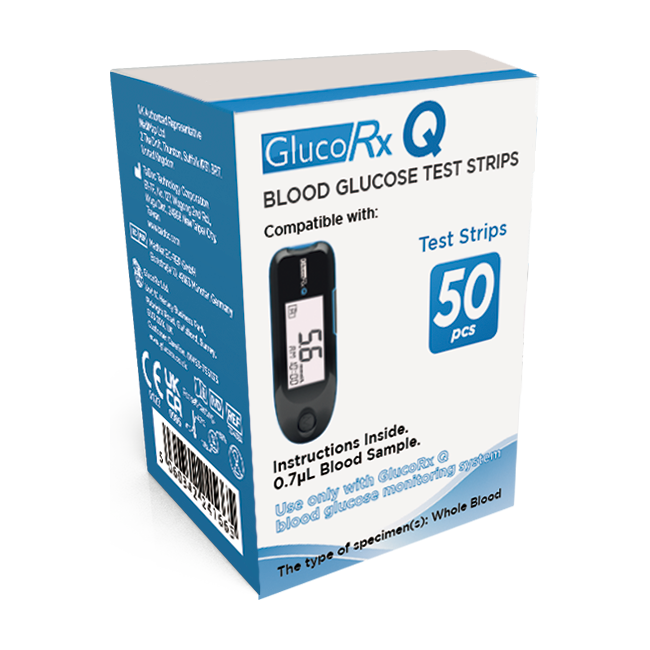
GlucoRx Q Testing Strips - Pack of 50 Strips
£6.24 ex. VAT · includes £1.25 (20.00% VAT)
Product Overview
Pack of 50 GlucoRx Q glucose testing strips featuring GOD enzyme technology for precise, reliable blood glucose self-monitoring with GlucoRx Q compatible metres.
Description
GlucoRx Q Blood Glucose Test Strips – Pack of 50 Strips are in-vitro diagnostic test strips designed for home and clinical self-monitoring of blood glucose levels in people with diabetes. They are specifically compatible with the GlucoRx Q blood glucose metre and provide a simple, accurate way to check glucose with a small blood sample. These strips feature advanced glucose oxidase (GOD) enzyme technology, helping to deliver dependable results that support effective diabetes management at home, in GP clinics, or in primary care settings.
Brand: GlucoRx — a recognised UK supplier of ISO-conforming diabetes self-monitoring products.
Pack Size: 50 test strips.
Compatible Devices: GlucoRx Q blood glucose metres only (not compatible with other meter ranges such as GlucoRx Nexus).
How to Use
- Prepare meter and hands: Wash and dry hands thoroughly to remove contaminants and reduce test error.
- Insert a strip: Open one test strip and insert it into a compatible GlucoRx Q metre. The meter will power on (if required) and prompt for a blood sample.
- Obtain blood sample: Using a sterile lancing device, obtain a fresh capillary blood drop (typically from a fingertip).
- Apply blood: Touch the edge of the strip’s sample area to the blood drop and allow it to be drawn into the reaction zone.
- Read result: Wait for the metre to display the blood glucose reading — results are usually available within a few seconds.
- Record and act: Document the result according to your personalised care plan and take action as advised by your clinician if the result falls outside your target range.
- Dispose: Dispose of used strips as clinical/household waste per local guidance. Do not reuse test strips.
Important: Always follow your GlucoRx Q metre’s manufacturer instructions and consult your healthcare professional or pharmacist if you have questions about frequency of testing or interpretation of results.
Ingredients
GlucoRx Q Blood Glucose Test Strips are medical diagnostic consumables, not medicinal products, so they do not contain “pharmaceutical ingredients” in the traditional sense. Instead, they comprise engineered materials that facilitate accurate glucose measurement:
• Enzyme system: Glucose oxidase (GOD) reagent chemistry — reacts with glucose in a fresh blood sample to produce a signal.
• Electrochemical electrodes: Conductive elements integrated into the strip substrate.
• Plastic substrate & reagent layers: Structural materials that support reagent deposition and electrical contact with the metre.
These components work together to allow electrochemical detection of glucose and a digital reading by a compatible metre. Strips are single-use only and should not be reused.
Side Effects & Warnings
Warnings & Precautions
• For in-vitro diagnostic use only: These strips are intended for blood glucose self-monitoring outside the body and only with a compatible GlucoRx Q metre. Using them with unsupported devices may lead to inaccurate results.
• Single-use only: Do not reuse test strips — reuse can lead to false or misleading readings and potential health risk.
• Proper storage: Store strips in the original container with the lid tightly closed, protected from moisture, heat and direct sunlight. Use before the printed expiry date on the pack.
• Handling blood: When collecting blood samples, ensure hygiene to minimise infection risk; dispose of lancets and used materials in a safe sharps container.
• Damaged packaging: If the strip packaging is damaged or compromised, do not use as strip performance may be affected.
• Interference: Certain substances or extreme environmental conditions (humidity, temperature) can affect strip performance — consult the metre insert for specifics.
When to Seek Advice
If blood glucose results consistently conflict with your symptoms, repeat the test with a fresh strip. Seek guidance from a pharmacist or diabetes specialist nurse for interpretation or if readings remain inconsistent. If you experience symptoms of hypoglycaemia (low blood glucose) or hyperglycaemia (high blood glucose) that do not match your meter readings, seek medical advice promptly.
Reporting adverse device performance or user concerns is recommended via the MHRA Yellow Card Scheme in the UK.