

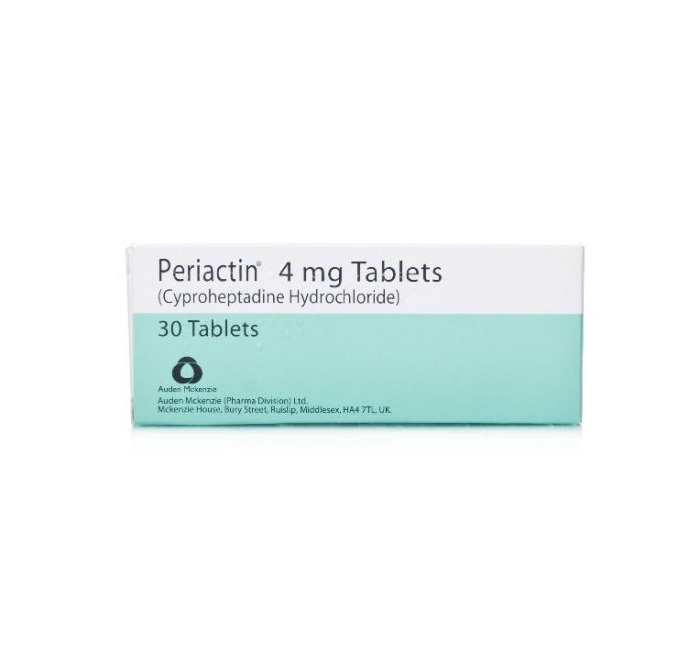
Periactin 4mg Anti-Histamine – 30 Tablets
£7.00 ex. VAT · includes £1.40 (20.00% VAT)
Pharmacy-only (P) medicine — a short WHAM screening is required before purchase.
Product Overview
Periactin 4mg tablets contain cyproheptadine, an antihistamine used for allergy symptoms such as itching, hives, and allergic rhinitis, and may also be used for migraine/vascular headache as directed.
Description
Periactin 4mg Anti-Histamine – 30 Tablets contains cyproheptadine hydrochloride, a first-generation antihistamine with additional anti-serotonin activity.
It is used to help relieve a range of allergic and itchy skin conditions and nasal/eye allergy symptoms, including:
- Itchy, inflamed skin allergies (including certain types of dermatitis and eczema)
- Urticaria (hives/nettle rash) and swelling reactions such as angioneurotic oedema
- Itching from chickenpox, and reactions to insect bites and stings
- Allergic rhinitis (sneezing, watery eyes, blocked/runny nose) and allergic conjunctivitis
- It may also be used for migraine/vascular-type headache in some patients, as directed
Pack size: 30 tablets in blister packaging.
Storage: Store below 25°C and keep in the original container.
How to Use
Always read the leaflet and follow the directions given by your prescriber, pharmacist, or the product leaflet. The dose is individual and depends on age, weight, and response.
For allergy and itching (pruritus)
- Adults: commonly started at 4mg three times daily, then adjusted as needed. Typical daily range 4–20mg; maximum 32mg/day.
- Children 7–14 years: 4mg two to three times daily; maximum 16mg/day. If an extra dose is needed, it should be taken at bedtime.
- Children 2–6 years: 2mg two to three times daily; maximum 12mg/day. If an extra dose is needed, it should be taken at bedtime.
- Children under 2 years: not recommended (no established safe dose).
For migraine / vascular headache (when advised)
- Initial: 4mg, may be repeated once after 30 minutes if needed. Many who respond obtain relief with 8mg; do not exceed 8mg within a 4–6 hour period.
- Maintenance: 4mg every 4–6 hours, as directed.
Practical advice
- This medicine can cause drowsiness. If affected, do not drive, cycle, or use tools/machinery.
- Avoid alcohol, as it can increase drowsiness and other side effects.
- If symptoms worsen or do not improve, seek medical advice.
Ingredients
Active ingredient (per tablet):
- Cyproheptadine hydrochloride 4mg (equivalent to 4mg anhydrous cyproheptadine hydrochloride).
Other ingredients:
- Calcium hydrogen phosphate (E341)
- Lactose
- Magnesium stearate (E572)
- Potato starch
- Pregelatinised maize starch
Allergy/intolerance information: contains lactose; not suitable for certain rare hereditary problems of galactose intolerance, Lapp lactase deficiency or glucose-galactose malabsorption.
Side Effects & Warnings
Common or notable side effects
- Drowsiness / somnolence (often improves after a few days)
- Dizziness, disturbed coordination, tremor, headache
- Dry mouth, nausea, vomiting, diarrhoea or constipation
- Blurred or double vision
- Increased appetite and weight gain
- Restlessness/excitation (can occur, especially in children)
Serious reactions (seek urgent medical help)
- Signs of a severe allergic reaction (rash/swelling, breathing difficulty)
- Fits/convulsions, severe confusion or hallucinations
Do not take if (selected key warnings)
Do not take Periactin if you:
- Are allergic to cyproheptadine or any ingredients
- Are taking MAO inhibitors (certain antidepressants/antibiotics such as linezolid)
- Have glaucoma, certain stomach/bowel obstruction conditions, difficulty passing urine/urinary retention, or are being treated for an acute asthma attack
- Are breast-feeding
- Are elderly and debilitated/not very mobile (higher risk of dizziness/sedation/hypotension)
Take special care and ask for advice before use if you have:
Asthma history, raised eye pressure, overactive thyroid, cardiovascular disease, or high blood pressure.
Interactions
- Alcohol and other medicines that cause drowsiness (e.g., sedatives/tranquillisers) can have additive effects.
- Can interact with medicines affecting serotonin (including SSRIs); ask a pharmacist/doctor if you take antidepressants.
Side effect reporting
Suspected side effects can be reported via the MHRA Yellow Card scheme.