

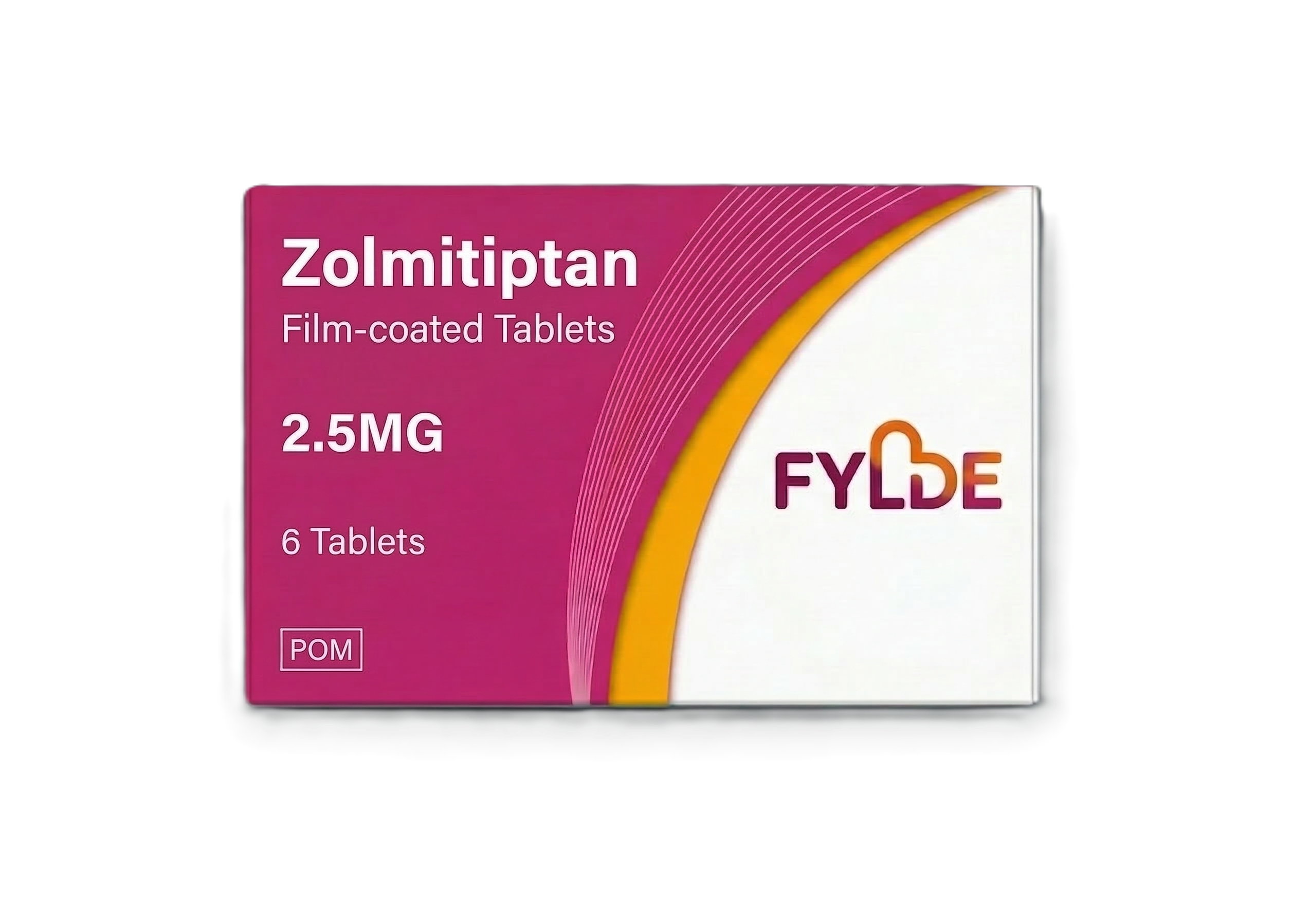
Zolmitriptan Migraine Relief - Pack of 6
This product requires a valid prescription
Complete a free online consultation with our clinicians to get your prescription issued.
Free Clinical review - Next Day Delivery Once Approved
Product Overview
This is a generic product, therefore depending on availability, the brand you receive may not be the same as the one pictured.
Description
Zomig 2.5mg Tablets contain zolmitriptan, which belongs to a group of medicines called triptans. The official patient leaflet states that Zomig is used to treat migraine headache. Migraine symptoms may be caused by swollen blood vessels in the head, and Zomig is thought to reduce the widening of these blood vessels. This helps relieve headache and other symptoms of a migraine attack, such as feeling or being sick and sensitivity to light and sound.
Zomig works only when a migraine attack has started. It is not used to prevent migraine. This makes it suitable for treatment at the onset of symptoms or once an attack is underway, in line with the official leaflet.
The leaflet describes Zomig 2.5mg tablets as yellow, round tablets marked with the letter “Z” on one side. It also states that the tablets come in blister packs containing 6 or 12 tablets, so a pack of 6 is part of the verified licensed pack range.
How to Use
Always take Zomig exactly as your doctor, prescriber or pharmacist has told you. The leaflet says you can take Zomig as soon as a migraine headache starts, or once an attack is underway.
The recommended dose in the leaflet is one 2.5mg tablet. If symptoms return within 24 hours after the first tablet, a second tablet may be taken, provided there is a gap of at least 2 hours between doses. The leaflet states that you should not take more than 10mg in 24 hours, which means no more than four 2.5mg tablets in a day.
Swallow the tablet whole with water. If the first tablet does not help your migraine, do not keep taking extra tablets for the same attack unless you have been advised otherwise by a healthcare professional. Follow the dispensing label and any directions given with your prescription. This medicine is generally not recommended for children and adolescents under 18 years and not recommended for adults over 65 years, according to the official leaflet.
Ingredients
Active ingredient:
Each tablet contains 2.5mg zolmitriptan.
Other ingredients:
Hypromellose, lactose anhydrous, magnesium stearate, microcrystalline cellulose, macrogol 400, macrogol 8000, sodium starch glycollate, titanium dioxide (E171) and yellow iron oxide (E172).
Allergy / intolerance advice:
The leaflet states that Zomig contains lactose anhydrous. This should be considered if you have been told by a doctor that you have an intolerance to some sugars.
Side Effects & Warnings
Do not take Zomig if you are allergic to zolmitriptan or any of the ingredients, if you have high blood pressure, have ever had heart problems such as heart attack or angina, have had a stroke or TIA, have severe kidney problems, or are taking certain other migraine medicines including ergotamine, ergot-type medicines, or another triptan.
Speak to a doctor or pharmacist before taking this medicine if you have risk factors for heart disease, including smoking, high blood pressure, high cholesterol, diabetes, a strong family history of heart disease, or if you have liver problems. The leaflet also advises caution if you have Wolff-Parkinson-White syndrome or if you are taking medicines such as SSRIs, SNRIs, or St John’s Wort, because of the risk of interactions.
Side effects listed in the leaflet include feeling sick, dizziness, sleepiness, weakness, warmth, tingling, heaviness, tightness, or pressure in the throat, neck, limbs or chest. Some people may also get stomach pain, dry mouth, or muscle weakness. Serious side effects needing urgent medical advice include allergic reactions, chest pain, heart attack, irregular heartbeat, or symptoms suggesting a stroke.
During a migraine attack your reactions may be slower than usual, and the leaflet notes that Zomig may also make you feel sleepy. Take care with driving or using machines until you know how the medicine affects you. In pregnancy or breast-feeding, advice from a doctor or pharmacist should be sought before use.