

Cold Sores in Winter: Triggers, Treatment and Prevention
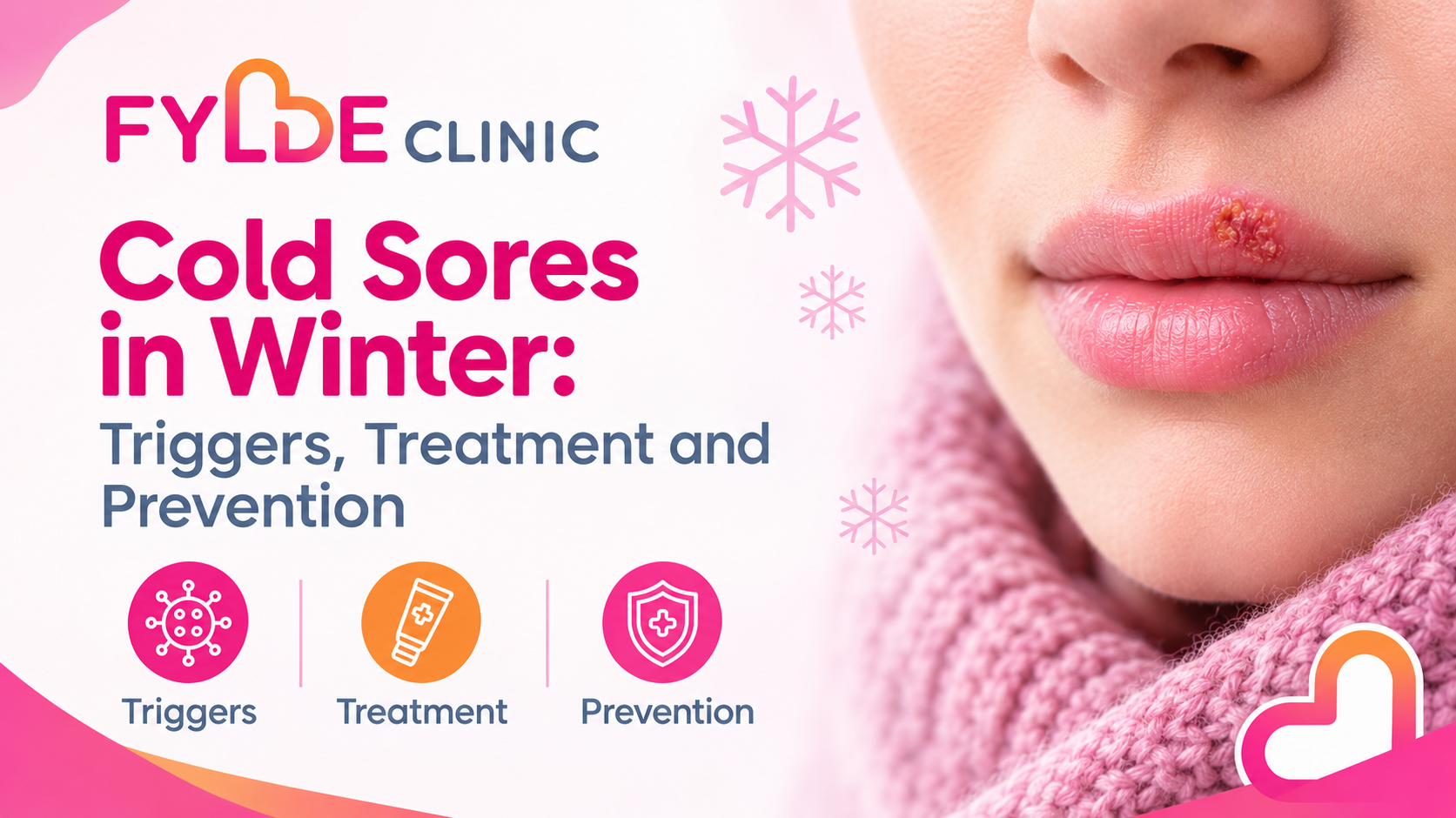
Cold weather can trigger cold sores in people who already carry the virus. Knowing what sets off an outbreak, which treatments help and how to protect your lips keeps you prepared through the colder months. Practical habits, early action and good pharmacy advice all help reduce discomfort and shorten outbreaks.
Some guests arrive uninvited, and this one loves December. It slips in with the cold wind, settles on your lower lip and announces itself with a tiny tingle. Cold sores in winter are common, and they have a talent for crashing parties, work weeks and family dinners. Nobody plans for that moment, and even a small sore can knock your confidence.
You cannot lock the door on the virus, but you can learn its habits and stay one step ahead. Here is what triggers cold sores, how to treat them and how to keep them away, in plain words you can use today.
What Cold Sores Are and Why They Return
Cold sores are small, fluid-filled blisters that form on or around the lips. The herpes simplex virus causes them, and most people catch it when they're young. The virus then stays in the body for life and can reactivate later.
A cold sore usually starts with tingling, itching or burning. The NHS says most cold sores clear up within 10 days, but they stay contagious until fully healed. Treatment works best when you start it at the first sign.
Common Cold Sore Triggers When Temperatures Drop
The virus stays quiet until something nudges it awake.
Cold, Dry Air and Wind
Cold temperatures and biting winds leave lips rough, tight and chapped, and many people notice outbreaks after harsh weather. Covering your mouth with a scarf on windy days gives your lips a simple shield.
Colds, Flu and Fever
Colds, flu and a high temperature can wake the virus, which is why a cold sore often follows a cold. While your immune system fights the infection, the virus gets a chance to reactivate. Rest well when you feel unwell.
Stress and Tiredness
Busy holiday weeks, work pressure and poor sleep drain your energy. Stress and tiredness are both well-known triggers, so a hectic December can set the stage for an outbreak. Good rest and calm routines support cold sore prevention all season.
Bright Winter Sun
Sunlight can trigger a flare-up, even on a cold winter day. Low winter sun and glare off snow expose your lips to UV rays, and sunbeds can have the same effect. Keep a lip balm with sun protection in your coat pocket.
Dehydration and Dry Heating
Central heating dries indoor air, and cold weather makes it easy to forget your water bottle. Dehydration leaves lips dry and cracked, so lip care matters even more. Sip water through the day and keep a gentle lip balm nearby.
You cannot control the weather, but you can prepare for the first tingle. Fylde Clinic, a GPhC-registered UK pharmacy, offers pharmacist-reviewed cold sore treatment after a quick online consultation, so you have help ready before winter sets in.
Cold Sore Treatment UK: Your Options
Most cold sore treatment UK options start at your local pharmacy, so help is easy to reach.
Antiviral Creams from a Pharmacist
Antiviral creams can speed up healing when you apply them at the first tingle. If you want to know how to get rid of cold sores quickly, starting treatment early makes the biggest difference. Wash your hands, then gently dab the cream onto the affected area.
Patches That Cover and Protect
Cold sore patches shield the skin while it heals and stop you touching the sore. A pharmacist can recommend one that suits you. Some pharmacies also sell light and laser devices designed for cold sores.
Antiviral Tablets from a GP
A GP may prescribe antiviral tablets if your cold sores are severe, painful or keep coming back. If you are pregnant, have a weakened immune system or notice a cold sore on a newborn baby, get urgent medical advice, as these groups need extra care.
Signs That Require Medical Advice
Contact a GP or pharmacist if a sore has not started to heal within 10 days, looks very large or worries you. A cold sore near the eyes needs urgent medical assessment, and so do painful, swollen gums with mouth sores in a child.
The sooner you act on that first tingle, the shorter your outbreak is likely to be. Fylde Clinic offers Lipsore Cold Sore Cream alongside free pharmacist advice, so you can start treatment the moment symptoms appear.
Cold Sore Stages and Care
Cold sores develop in stages, and the right care at each one helps manage symptoms and protect the area.
Stage | What You Notice | What Helps |
Tingle | Itching, burning or tingling | Apply antiviral cream straight away |
Blister | Small fluid-filled blisters | Use a patch and avoid touching |
Burst | Blisters open and weep | Wash hands and skip kissing |
Healing | Sores dry and crust over | Stay patient and keep lips protected |
Cold Sore Prevention for the Colder Months
A few small habits can protect your lips all season.
Protect Your Lips Outdoors
The NHS recommends a lip balm with SPF 15 or above. Reapply it regularly when you are outdoors, and wear a scarf over your mouth in cold wind. Never share lip balm, because it can spread the virus to others.
Look After Your Body
Start with plenty of water, steady sleep and calm routines, because tiredness and tension can wake the virus. Keep a note of what happened before each outbreak, and you will learn your own pattern.
Stop the Spread
Wash your hands with soap and water after touching a sore, and do not kiss anyone while it is active. Skip shared towels and cups too. A sore is contagious from the first tingle until it has fully healed, so protect the people around you.
Conclusion
Learn your cold sore triggers and you stay in control. Protect your lips from wind, keep water close, rest well and act at the first tingle. A pharmacist can guide you if outbreaks keep returning. Winter may be tough on your lips, but a simple plan keeps cold sores in check.
Keep a reliable cream in your winter kit too. Fylde Clinic offers Blistex Cold Sore Cream online, so relief is ready the moment the next tingle starts.