
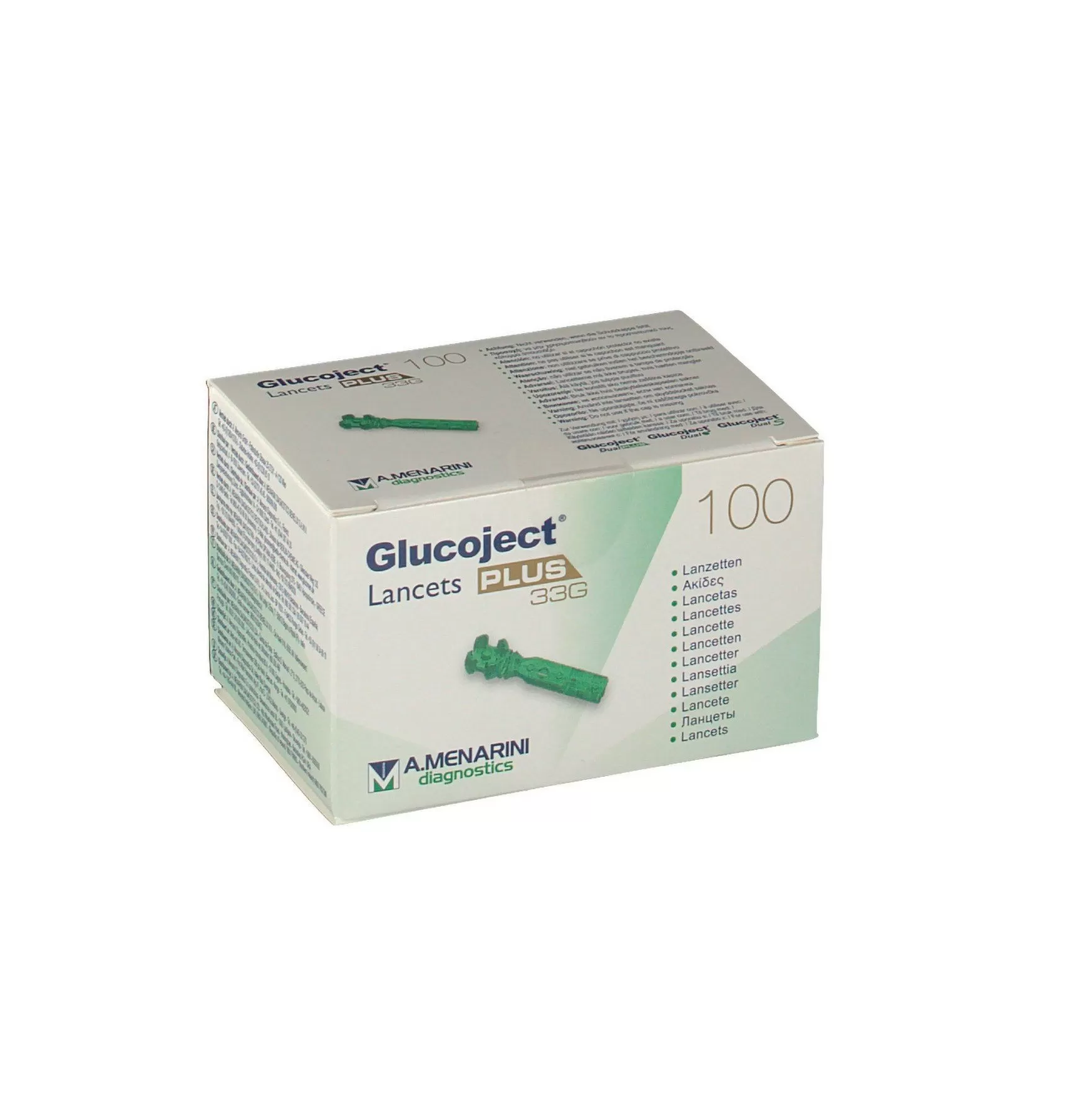
Glucoject Lancets Plus 33g - 100 Lancets
£4.76 ex. VAT · includes £0.95 (20.00% VAT)
Product Overview
Pack of 100 sterile Glucoject Lancets Plus 33g with ultra-thin, silicone-coated needles for gentle, precise blood sampling compatible with Glucoject Dual and most standard lancing devices.
Description
Glucoject Lancets Plus 33g – 100 Sterile Lancets are single-use medical devices intended to assist in capillary blood sampling for self-monitoring of blood glucose and other point-of-care tests. These lancets are ultra-thin at 33 gauge (approx. 0.20 mm) — around 32 % thinner than 30 g alternatives — which can help many users obtain an adequate blood sample with reduced discomfort compared with thicker needles.
The triple-bevel, silicone-coated needle tips promote a smooth, gentle puncture, making sampling easier and potentially more comfortable for regular use. These lancets are sterilised and individually sealed until use, and are compatible with Glucoject Dual, Glucoject Dual Plus, Glucoject Dual S lancing devices, as well as most standard-format lancing tools on the market — offering broad compatibility for routine diabetes care.
Brand: Glucoject (by a recognised diabetes care manufacturer)
Pack Size: 100 sterile lancets
Gauge/Depth: 33 g / approx. 0.20 mm
Intended Use: Capillary blood sampling for glucose monitoring and related diagnostic testing
How to Use
- Prepare: Wash and dry your hands thoroughly prior to sampling to reduce contamination risk and improve accuracy.
- Load Lancet: Remove one sterile lancet from its packaging and insert it into a compatible lancing device (e.g., Glucoject Dual series or other standard devices that accept 33 g lancets).
- Adjust Depth (if available): Set your lancing device to the appropriate penetration depth according to your skin type and comfort.
- Perform Puncture: Hold the device against the side of your fingertip or approved alternate site and activate the lancet mechanism to obtain a drop of blood.
- Collect Sample: Use the resulting blood drop immediately with your blood glucose metre or diagnostic test strip per that device’s instructions.
- Dispose: Lancets are for one-time use only. Dispose of used lancets in a designated sharps container in line with UK clinical waste guidance.
Best Practice Tips: Always follow the manufacturer’s instructions for your specific lancing device. Consult a healthcare professional if you are unsure about sampling technique or frequency.
Ingredients
As a medical device consumable, Glucoject Lancets Plus 33g do not contain pharmaceutical “ingredients” in the way a medicine would. Their construction comprises medical-grade materials designed for safe and hygienic use:
• Sterile 33 gauge stainless steel needle — ultra-thin for minimal discomfort.
• Silicone coating on the needle — ensures smooth skin penetration and reduces drag.
• Plastic hub and protective cap — maintains sterility until use and assists safe insertion into a lancing device.
These components work together to allow accurate capillary blood sampling with reduced trauma to the skin compared with thicker needles.
Side Effects & Warnings
Warnings & Precautions
• Single-Use Only: These lancets are designed for single, sterile use. Reuse increases the risk of infection, dulls the needle, and may compromise sample quality and accuracy.
• Not for Injection: These lancets are not intended to deliver medication or perform injections — they are solely for capillary blood sampling.
• Safe Disposal: Used lancets should be placed immediately into a sharps/clinical waste container and not disposed of in general household waste in line with UK guidelines.
• Storage: Store lancets in the original packaging, in a cool, dry place away from direct sunlight and out of the reach of children and pets.
• Sterility Check: Do not use if the protective packaging is damaged or if the lancet shows signs of compromise.
• Compatibility: While compatible with Glucoject Dual series devices, always ensure your lancing device model supports 33 g lancets prior to use.
Potential Local Effects
• Some users may experience mild discomfort, redness or a small amount of bleeding at the puncture site — this is common and generally short-lived.
• Persistent discomfort, swelling, signs of infection (e.g., warmth, discharge), or difficulty obtaining sufficient blood may warrant advice from a pharmacist or healthcare professional.
When to Seek Advice
Consult a pharmacist, nurse or clinician if you are unsure about sampling technique, experience repeated difficulty obtaining blood, or notice persistent irritation or unexpected symptoms at puncture sites. If you observe any device defects, report them through appropriate channels such as the MHRA Yellow Card Scheme.
Complete Your Care