

Thrush or BV? How to Tell the Difference
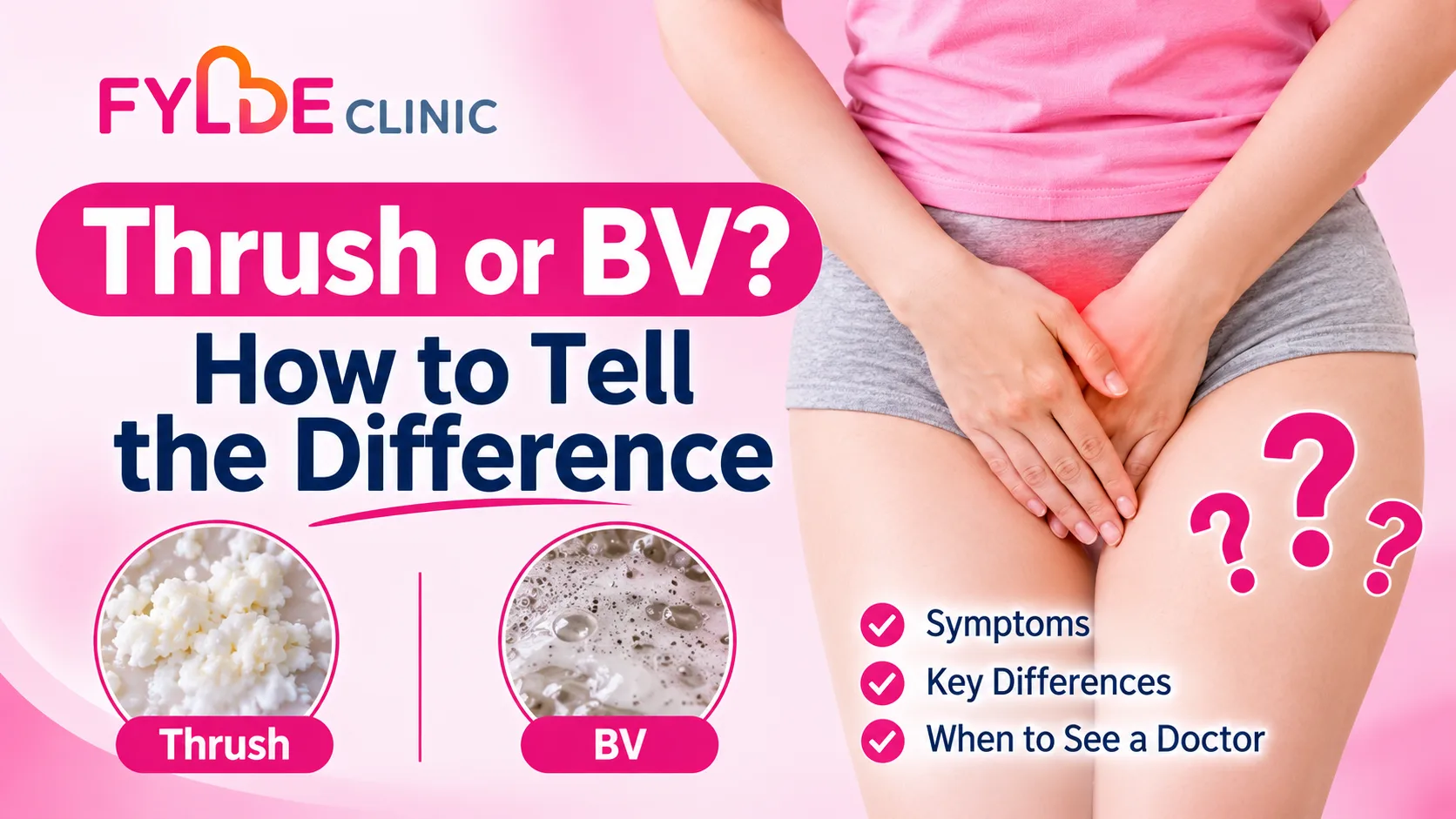
Vaginal thrush and bacterial vaginosis (BV) are common conditions with different causes, symptoms, and treatments. Knowing how they differ in discharge, odour, itching and irritation helps you spot the likely cause, but the symptoms often overlap, so a professional assessment is the best way to get the right treatment.
Changes in vaginal discharge, unusual odours, itching and irritation can feel uncomfortable and confusing. Two of the most common causes are vaginal thrush and bacterial vaginosis (BV). Both affect vaginal health, but they develop for different reasons and need different treatments.
Knowing the difference helps you understand what might be causing your discomfort and when to get medical advice. Thrush is a yeast infection, while BV happens when the normal balance of bacteria in the vagina is disrupted. Their symptoms can overlap, so recognising the main differences is useful, but you still need an accurate diagnosis before starting treatment.
What Is the Difference Between Thrush and BV?
The main difference lies in the cause. Vaginal thrush develops when Candida, a yeast that normally lives in the body, grows out of control. BV happens when the balance of bacteria in the vagina shifts and certain bacteria start to dominate.
Neither condition counts as a sexually transmitted infection (STI). However, sex can affect vaginal health and may play a part in BV developing or coming back.
Thrush commonly causes itching, soreness and thick white discharge. BV is more likely to cause thin, watery discharge with a noticeable fishy smell. However, some people with BV have no symptoms at all.
What Are the Common Symptoms of Vaginal Thrush?
Vaginal thrush can cause noticeable irritation around the vagina and vulva. Symptoms range in intensity, and some people find the soreness affects their daily activities.
Common thrush symptoms include:
Thick white discharge: The discharge may have a lumpy appearance, similar to cottage cheese, and usually does not have a strong smell.
Intense itching: The vulva and vaginal area may feel itchy or irritated, sometimes making it difficult to feel comfortable.
Redness and swelling: The skin around the vaginal opening may become red, swollen or sensitive.
Stinging or burning: Discomfort may occur during urination or sexual activity, particularly when the surrounding skin is inflamed.
What Causes Vaginal Thrush?
Vaginal thrush develops when the natural balance of microorganisms changes and Candida multiplies. Antibiotics, pregnancy, hormonal changes, poorly controlled diabetes and a weakened immune system can all raise your risk.
Thrush does not usually cause a strong or unpleasant smell. If your discharge has a distinct fishy odour, BV or another condition is the more likely cause.
How Long Does Vaginal Thrush Last and When Should You Seek Help?
With the right antifungal treatment, vaginal thrush usually clears within 7 to 14 days. The Canesten Oral & Cream Duo combines an oral capsule with an external cream to treat the infection and ease itching. If symptoms persist after treatment, keep coming back or get worse, see a healthcare professional to confirm the cause.
Thrush can cause soreness and discomfort, but significant pelvic pain is not typical of an uncomplicated yeast infection. Speak to a healthcare professional if you have pelvic pain or any unusual symptoms so you get the right diagnosis and treatment.
What Are the Main BV Symptoms?
Unlike thrush, BV stems from an imbalance in the bacteria that naturally live in the vagina. It mostly affects people of reproductive age and can develop without obvious symptoms.
The most common BV symptoms include:
Fishy vaginal odour: A strong, unpleasant smell is one of the most recognisable signs. It may become more noticeable after sex or during menstruation.
Thin discharge: Discharge may become watery, smooth, and more noticeable than usual.
Greyish-white discharge: The colour may change from the usual clear or white appearance.
Mild irritation: Some people experience discomfort or irritation, although significant itching and soreness are less typical of BV.
Around half of people with BV notice no symptoms at all, so the condition can be present without any obvious changes.
How Do Thrush Symptoms Differ from Bacterial Vaginosis?
Comparing the symptoms side by side makes the differences easier to see. However, symptoms alone cannot confirm a diagnosis, especially when irritation or unusual discharge has several possible causes.
Symptom | Vaginal Thrush | Bacterial Vaginosis |
|---|---|---|
Main cause | Candida yeast overgrowth | Imbalance in vaginal bacteria |
Discharge | Thick, white and lumpy | Thin, watery and greyish-white |
Smell | Usually no strong smell | Often fishy or unpleasant |
Itching | Common and sometimes intense | Not usually a main symptom |
Redness and soreness | Common | Less typical |
Burning during urination | Can occur | May occur in some cases |
No noticeable symptoms | Less common | Common |
Thrush vs bacterial vaginosis symptoms can be hard to tell apart without a test. Both conditions can change your discharge, and irritation or burning can have several causes. A Canestest Self Test for Vaginal Infections can help show whether thrush or BV is more likely before you choose a treatment.
If your symptoms are new, unusual or persistent, a healthcare professional can identify the cause rather than relying on appearance alone.
How Is a Vaginal Infection Diagnosed and Treated?
A healthcare professional will ask about your symptoms, medical history and any recent changes in your vaginal health. A vaginal swab can identify Candida, BV or other infections, and they may also recommend STI testing based on your symptoms and sexual history.
Treatment depends on the diagnosis:
Thrush: Antifungal medicines usually clear it. Vaginal pessaries include the Canesten Soft Gel Pessary and the Canesten Soft Gel Pessary Combi. For external itching, you can use Canesten Thrush Cream Clotrimazole 2%, while the Canesten Cream Combi provides both internal and external cream. Oral treatment is also available with the Canesten Oral Fluconazole 150mg Capsule.
BV: Prescribed antibiotics, available as tablets, vaginal gels or creams, are the usual treatment. Non-antibiotic gels, including Balance Activ BV Treatment Gel and Canesbalance Vaginal Gel, can also help relieve symptoms and restore the vagina’s natural pH.
Antifungal medicine will not treat BV, and antibiotics will not treat thrush, so getting the diagnosis right matters.
Experiencing symptoms of vaginal thrush? Visit Fylde Clinic online to explore suitable vaginal thrush treatment and get professional advice to help manage your symptoms.
When Should You Seek Medical Advice?
Getting the right diagnosis matters, particularly if you have never had vaginal symptoms before. Seek medical advice if your discharge changes in colour, smell or consistency, or if you develop itching, soreness or burning.
It is especially important to get assessed if:
Symptoms appear for the first time.
Symptoms return frequently or do not improve after treatment.
There is pelvic or lower abdominal pain.
Bleeding occurs between periods or after sex.
Symptoms develop after sex with a new partner.
There is a possibility of pregnancy.
If you are pregnant and have symptoms, contact your GP or midwife. BV can be linked to pregnancy complications, so a proper assessment is important.
Conclusion
Vaginal thrush and BV can cause similar changes in discharge, but their main symptoms differ. Thrush usually causes itching, soreness, and thick white discharge, while BV is more often linked to thin discharge and a fishy smell. Because symptoms overlap and other conditions can cause similar discomfort, get a proper assessment before choosing treatment.
Unsure if your symptoms point to thrush or BV? Book an online healthcare consultation with Fylde Clinic for expert advice on your vaginal health and the right treatment for your symptoms.
Frequently Asked Questions
Can You Have Thrush and BV at the Same Time?
Yes, both can occur together, which is sometimes called a mixed vaginal infection. Because the symptoms overlap, you may need a vaginal swab or professional assessment to identify both causes and get the right treatment.
Can BV Go Away Without Treatment?
BV sometimes clears on its own, but symptoms can persist or come back. A healthcare professional can assess you and recommend antibiotics if you need them, and treatment is especially important if you are pregnant.
Can Thrush or BV Be Passed on Through Sex?
Neither condition counts as an STI. However, sex can affect your risk of BV, and sex can occasionally trigger thrush or pass it on. If you have a new partner or unusual symptoms, consider STI testing too.